


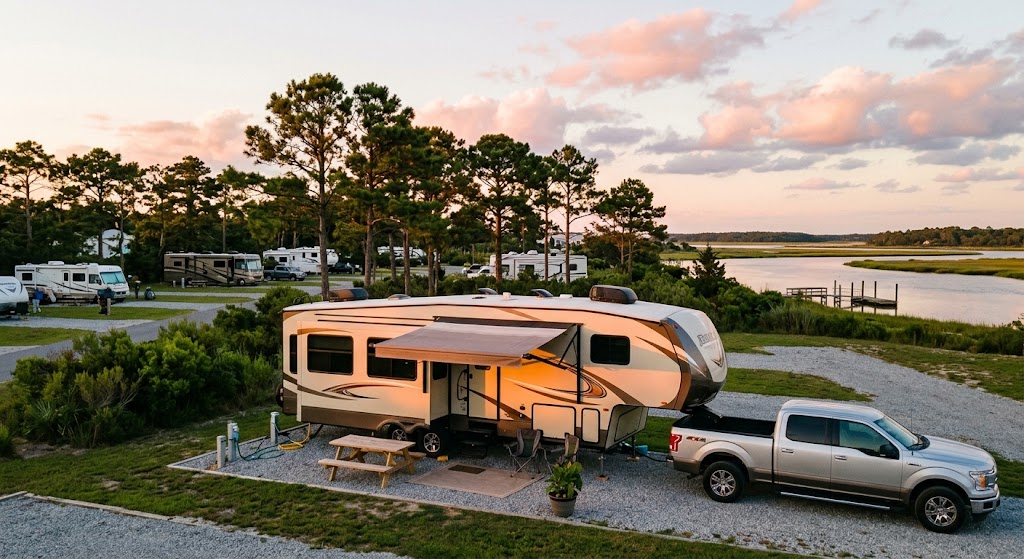
Military assignments, contract work, training, relocations, and family visits can create a temporary housing gap. Instead of signing an apartment lease or moving between hotels, some travelers consider RV parks near Camp Lejeune.
An RV can provide a familiar living space, but a comfortable temporary stay requires planning.
Choose the Right Location
A short distance on a map does not always equal a short commute. Gate availability, construction, security procedures, and peak traffic can affect travel times.
Before reserving an RV site:
- Identify the gate you expect to use
- Test the route during your normal commuting hours
- Check installation advisories
- Ask whether road conditions change seasonally
- Confirm that your intended gate serves your access category
The official Camp Lejeune website provides current installation information. Visitors should also review requirements through the Provost Marshal’s Office.
The local guide to things to do near Camp Lejeune can help you understand what is available outside the installation.
Understand the Difference Between Camping and Temporary Living
A weekend campsite only needs to support a few meals and nights. Temporary RV living may require reliable laundry access, parcel arrangements, waste disposal, climate control, and room for work clothes or equipment.
When comparing RV parks near Camp Lejeune, ask about:
- Monthly or extended-stay availability
- Full hookups and electric service
- Charges included in the monthly rate
- Mail and package policies
- Laundry and bathhouse access
- Guest, pet, and vehicle rules
- Boat or utility-trailer storage
- Quiet hours and community standards
Never assume that a monthly rate automatically includes electricity or that long stays are available on every site.
Prepare for Coastal Conditions
Sneads Ferry’s coastal climate can bring heat, humidity, heavy rain, wind, salt air, and occasional freezing temperatures.
Inspect your roof seals, tires, air-conditioning system, surge protection, and water connections before arriving. Use moisture control inside the RV and rinse exposed metal when salt accumulates.
The article on setting up an RV for a February stay offers useful cold-weather preparation. Travelers sensitive to seasonal pollen can also follow these coastal RV allergy-management tips.
Build a Practical Daily Routine
Small habits make an extended stay easier. Choose designated places for shoes, work equipment, laundry, and important documents. Plan weekly grocery and maintenance days instead of letting minor tasks accumulate.
Respecting campground rules matters even more during a longer stay. Keep outdoor belongings within your site, manage waste promptly, control pet noise, and maintain a clean appearance.
Make Time to Enjoy the Area
Temporary housing should still feel comfortable. North Topsail Beach, local fishing areas, waterfront restaurants, and small-town attractions provide easy ways to unwind.
This guide comparing North Topsail Beach and Surf City can help you plan a free afternoon.
The best RV parks near Camp Lejeune provide more than a parking space. Look for a location that supports your commute, daily needs, budget, and desired level of community. Confirm all current rates and policies directly before committing to an extended stay.