


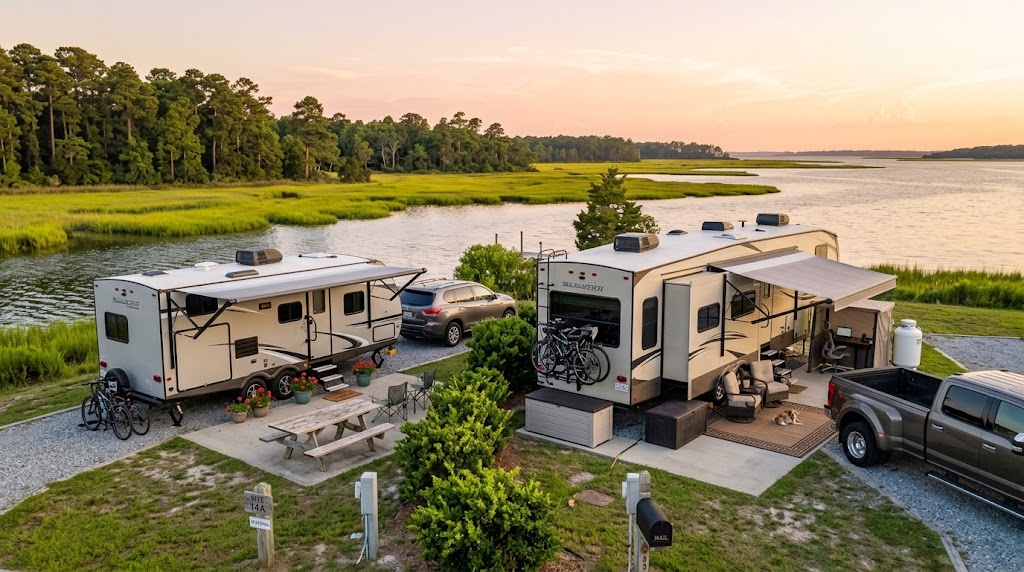
Seasonal and full-time RV travelers may use similar vehicles, but their routines can be very different. Understanding those differences helps you choose an arrangement that matches your finances, responsibilities, and desire to travel.
For many people, seasonal RV camping offers a comfortable middle ground between occasional holidays and living on the road throughout the year.
What Is Seasonal RV Camping?
Seasonal RV camping usually means keeping an RV at one campground for several weeks or months during a preferred part of the year.
Some travelers spend winter near the coast, while others reserve a summer site near fishing, boating, or family attractions. They may retain a permanent home elsewhere and return to it after the season.
Benefits can include:
- Less frequent towing and setup
- A familiar location
- Time to meet other campers
- Easier access to favorite activities
- More predictable travel planning
The guide to visiting Sneads Ferry during the off-season explains how different times of year can change the local experience.
What Does Full-Time RV Living Involve?
Full-time RV living makes the RV a primary residence. Some full-time travelers move regularly, while others remain at one campground for an extended period.
They must plan for matters that short-term and seasonal campers may handle at home, including:
- Mail and legal residency
- Health care and prescriptions
- Insurance
- Vehicle registration
- Storage
- Repairs
- Reliable internet
- Severe-weather planning
Full-time living requires a larger emergency fund because an RV problem can affect both transportation and housing.
Compare the Costs Carefully
Do not compare only the nightly and monthly rates. Ask what each price includes.
Potential expenses include:
- Electricity
- Propane
- Internet
- Laundry
- Extra vehicles
- Boat or trailer storage
- RV maintenance
- Insurance
- Mail services
Seasonal RV camping may reduce travel fuel and repeated setup costs because the RV stays in one place. Full-time travelers avoid maintaining a separate home, but they take responsibility for more year-round living expenses.
Consider Maintenance and Weather
An RV used throughout the year experiences more wear. Full-time residents must remain prepared for temperature extremes, storms, leaks, tire problems, and equipment failures.
Seasonal campers can choose a preferred climate, but the RV still needs protection while occupied and stored. Review these February RV setup tips before planning a cooler coastal stay.
The U.S. National Weather Service should be part of every long-term camper’s weather routine.
Think About Community and Privacy
Staying for a season gives you time to know your neighbours and participate in campground events. Full-time travelers can also form strong communities, although frequent movement may make that more difficult.
Review quiet hours, outdoor-storage limits, guest policies, and site-maintenance expectations. Long stays work best when everyone treats the campground as a shared environment.
This article about holiday decorating in an RV offers ideas for personalising a small space without sacrificing function.
Which Choice Fits You?
Choose seasonal RV camping if you want an extended escape while maintaining a home elsewhere. Consider full-time RV living if you are prepared to manage housing, travel, maintenance, and administrative responsibilities from the road.
Before deciding, try a month-long stay. It provides a more realistic test than a weekend and can show whether the routine suits you.