


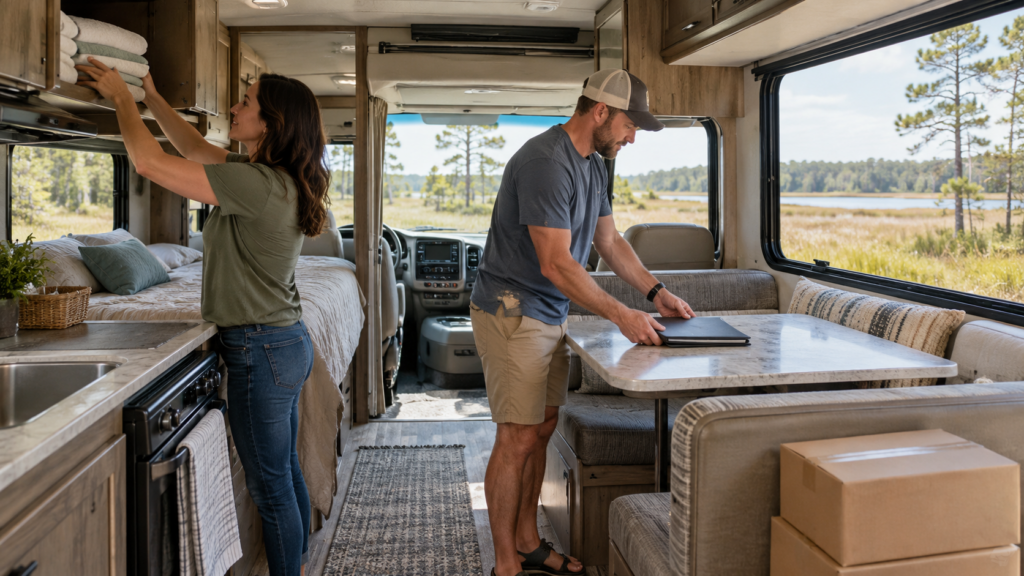
A home purchase, renovation, or move does not always follow a neat timetable. You may need to leave one property before the next is ready. For people who already have a suitable RV, RV living between homes can provide an accommodation option while those plans come together.
Sneads Ferry RV Parks lists monthly and extended stays for guests who are building, buying, or relocating. Before choosing that arrangement, confirm availability, your RV’s suitability, and the terms for the length of stay you expect to need.
Plan Around a Realistic Date Range
Start with your earliest possible arrival and the date you currently expect to leave. Then identify what could change, such as a construction delay or a revised closing date.
Ask how extensions are handled and whether your preferred site could remain available. An initial reservation does not guarantee additional nights later.
Review cancellation and departure terms as carefully as arrival details. A flexible personal schedule still needs to fit the conditions of the accommodation you book.
Our monthly RV sites page brings the current options together and provides a starting point for a long-term inquiry.
Choose the Park Around Everyday Life
During a move, practical needs can matter more than a sightseeing list. Consider travel to work, appointments, your new property, and the shops you expect to use regularly.
Compare the individual parks rather than assuming the same facilities at each. Fulchers Landing lists laundry, while Seahaven lists complimentary Wi-Fi. Ask about any other service that is essential to your routine.
If your job requires reliable internet, make a separate connectivity plan and test it after arrival. A listed Wi-Fi amenity does not establish that it meets every employer’s needs.
Separate Daily Belongings From Moving Boxes
Pack the items you will actually use in the RV: everyday clothing, essential documents, suitable cooking equipment, and personal supplies. Keep them accessible from the beginning.
Furniture and household boxes can overwhelm an RV quickly. Arrange separate storage if needed instead of using living areas or the campsite for items that do not fit.
Ask about outdoor storage and site rules before bringing extra equipment. Keep doors, emergency exits, utility access, and walking routes clear throughout the stay.
Sort Mail and Delivery Arrangements in Advance
Do not start sending mail to the campground without checking its current policy. Ask whether letters or packages are accepted, how they should be addressed, and whether any limits apply.
The USPS guide to mail forwarding and address changes explains temporary and permanent arrangements. Choose the approach that fits your move, and contact important senders directly where necessary.
A mail-forwarding request does not resolve every administrative change. Keep a separate list for insurers, employers, banks, and other organizations that need updated information.
Keep the RV Ready for the Whole Stay
RV living between homes still requires attention to the vehicle and its systems. Follow manufacturer instructions for regular checks and use qualified help when something needs repair.
Keep your towing or travel arrangements workable rather than allowing moving supplies to block access to essential equipment. Confirm the campground’s severe-weather procedures and know where you would go if conditions require leaving.
Discuss any permitted maintenance with staff first. A longer reservation should not be taken as approval to perform vehicle repairs on the site.
Give the Transition a Manageable Routine
Choose regular times for groceries, laundry, paperwork, and checking progress on the new home. A simple routine reduces the feeling that every day is another moving day.
Explore Silver Sands RV Park and the other monthly options with your dates and needs in mind. Contact our team to discuss whether RV living between homes at one of our parks suits your situation and what arrangements can be confirmed before you arrive.