


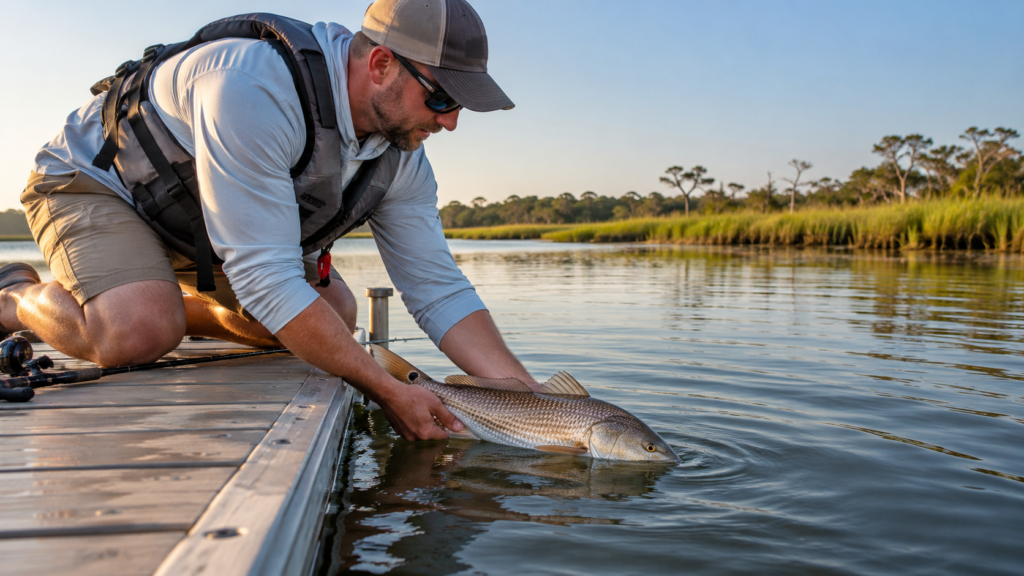
Fishing can be a short part of a campground day rather than an all-day trip. If you enjoy returning your catch to the water, catch and release fishing gives the outing a clear purpose beyond bringing something back for dinner.
Seahaven RV Park lists catch and release fishing among its amenities. Before bringing your tackle, ask about the permitted fishing area, current access, and any park-specific rules. Planning the release is just as important as planning the cast.
Confirm Where and When You May Fish
Start with the Seahaven RV Park information and contact the team with practical questions. Ask which areas are open to guests and whether there are times or locations to avoid.
Keep fishing activity clear of launch users, dock operations, and other guests. A waterfront location does not mean every edge, dock, or slip is available for casting.
If children are joining, choose a position where an adult can supervise them closely. Establish boundaries before unpacking rods and hooks.
Check Licensing and Current Fishing Rules
Releasing a fish does not automatically mean no license or other rule applies. Check the requirements for the actual waters and activity before fishing.
The North Carolina Division of Marine Fisheries’ recreational licensing page provides official coastal license information and links to relevant resources. Confirm any applicable exemptions rather than assuming a private campground setting creates one.
Also check current species rules and restrictions. Park access permission and state fishing requirements are separate matters, and you need to understand both.
Choose Equipment With the Release in Mind
Use tackle appropriate to the fish you may encounter so you can land them without an unnecessarily prolonged fight. Have suitable release tools ready before casting.
The NOAA Fisheries catch-and-release guide discusses appropriate hooks, landing nets, and dehooking tools. Follow any fishery-specific gear requirements as well.
Keep the setup manageable, especially when helping a child or an inexperienced angler. A simple arrangement you can handle confidently is more useful than several unattended rods and loose equipment around your feet.
Minimize Handling and Time Out of the Water
Where practical, release the fish without lifting it from the water. If handling is necessary, wet your hands first and support its body appropriately.
Avoid touching eyes or gills, placing the fish on a dry surface, or suspending it by the mouth. Keep air exposure brief and prioritize the release over arranging a photograph.
If a hook is deeply swallowed, follow NOAA’s guidance rather than pulling forcefully to recover it. The aim is to reduce additional injury, not retrieve every piece of tackle at the fish’s expense.
Catch and release fishing does not guarantee survival. Thoughtful equipment choices and careful handling can improve the fish’s chances after it returns to the water.
Leave the Fishing Area Ready for Others
Collect discarded line, hooks, packaging, and other litter before leaving. Keep tackle secured when people are walking past, and avoid leaving bait or equipment where pets or children can reach it.
Watch conditions throughout the outing. Stop if wind, lightning, or another hazard makes the location unsuitable, and follow staff directions about access.
For broader trip planning, our Sneads Ferry fishing seasons guide introduces seasonal fishing patterns. Use it alongside current official regulations rather than as a substitute for them.
Add Responsible Fishing to Your Coastal Visit
Catch and release fishing can fit comfortably into a stay that also leaves room for relaxing ashore. Contact Seahaven to confirm fishing access and accommodation availability, prepare your equipment in advance, and make a careful release part of every successful catch